Inside this article
Why the GDA route matters for many students
A General Duty Assistant course is often considered by students who want a practical healthcare role without waiting years to understand the field. For many families, it feels approachable because it connects learning with visible, human-centered work inside healthcare environments.
In Kerala, this route is especially relevant for students who want to build service discipline, care awareness, and patient-support confidence after 10th.
What students usually learn in a GDA-oriented program
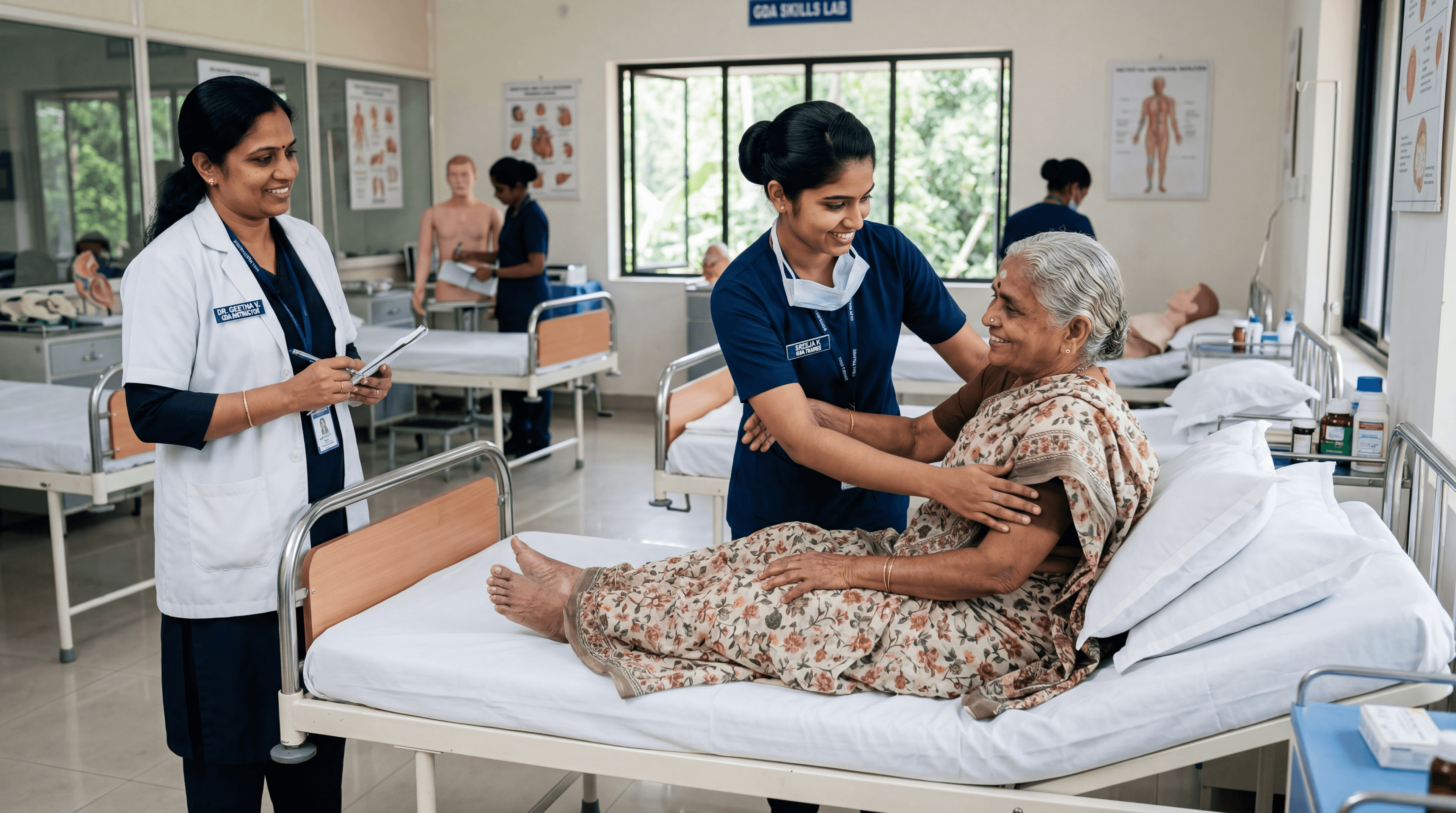
The role is centered on support. Learners are introduced to patient interaction, hygiene awareness, ward routines, and basic assistance practices that help care environments function smoothly.
- Patient support and communication basics
- Hygiene, safety, and workplace discipline
- Awareness of healthcare routines and care assistance
- Practical readiness for supervised support roles
Who this course can suit
This option often suits students who want a skill-first entry point into healthcare and families who value a practical learning path. It can also be a useful choice for learners who want to begin with a focused support role and understand the sector from the inside.
How to compare GDA with other healthcare options
Students comparing GDA with nursing assistant or lab-related courses should look at the kind of work they feel drawn to. If the learner is interested in patient-facing support, GDA becomes a strong early option. If diagnostics or longer study pathways matter more, another healthcare track may be better.
A direct admissions discussion can help families avoid confusion and choose the course that best matches qualification and career interest.
FAQs
Common questions students and parents ask
Is a GDA course mostly theory-based?
Students usually look for GDA programs because they want practical, role-based learning connected to healthcare support work rather than only classroom theory.
Can students enquire about this course after 10th?
Yes. This is one of the reasons the course often comes up in family discussions after 10th, especially for learners who want an earlier career-focused path.
What should parents ask before admission?
They should ask about eligibility, duration, the type of practical exposure included, and how the course fits the student’s long-term healthcare interests.